Week 14: Critical Race Theory
Darby
English’s “How to See a Work of Art in Total Darkness” exposes how convoluted the
idea of race is. Race is socially construed. Race is based on the treatment
done by others that can categorize a person into a difficult class. English also
exposes how race has been able to play a key role in how audiences are supposed
to interact with art, but mainly how the art industry has kept art created by
black artist apart from art created by white artist. Which can only make sense
since the idea of race is that people are different from each other based on
the amount of melanin in their skin tone. This is a form of segregation that
the art industry has been able to implement, and black artist and white artist have
also helped to keep this segregation alive.
Black artists in a traditional sense this has made
art about the mistreatment of the black community that has shaped the formation
of the black identity. Black artists are creating and have the right to make
art about the treatment of slaves or the beatings caused by police brutality.
These are black issues the whole world is aware of, but it affects mainly black
audiences looking at art pieces showing these depictions. Thus, confirming that
the art is black. Other black artists have centered on art that shows them as
human. Human in the aspect that they are like everyone else, it does change the
narrative that blacks are more than just the suffering. The black community has
endured more and carry the hope to no longer be victimized in a society that does
not see them as equal. Carrie Mae Weems is championed by English for being a
black artist that does not focus on being black. But the idea of having to be
seen as human boils down to race, since the society we live in requires that
blacks understand that they are not equal.
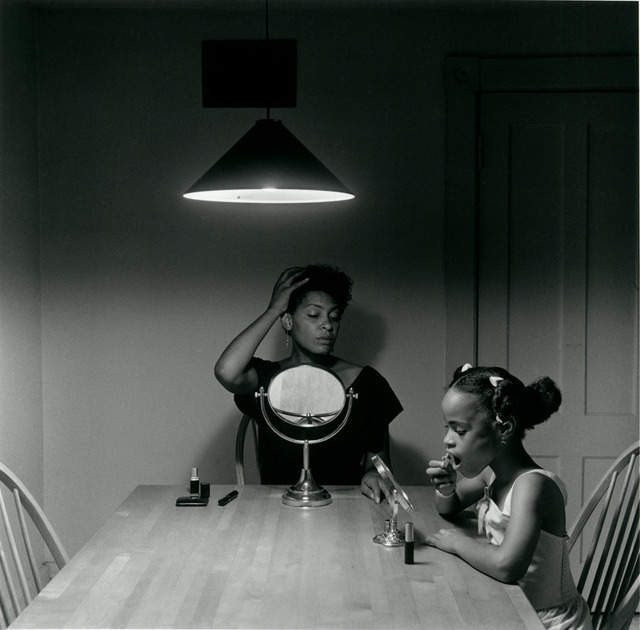
Darby English is pushing for the idea that black art is more than just black, and I do agree that black art is just art. However, there is nothing wrong with the idea of black art, especially since we all live and participate in a social structure that made race an important factor of how life was meant to be lived. It would be great to live in a colorless world and attempt to remove the boundary that separate blacks and whites. But I fear that if that label was to be removed; black art would outshine that of the whites and maybe, just maybe whites would be the minority.
Source: Darby English, "Introduction, in How to See a Work of Art in Total Darkness (2007)


In Europe we are amazed that Americans refer to themselves as African American or Black or white, in Europe we're all European regardless of our skin color. Some of us Europeans may have grandparents in Jamaica or Botswana, but that variation is defined by their cultural background and has nothing to do with the melatonin in their skin. Unfortunately the USA is obsessed with the color of a persons skin. Culture as Derby infers is a separate issue to skin color and should be treated as such. Derby was I imagined relieved to discuss American artists who focused on their culture rather than their skin color.
ReplyDeleteThe world would be such more of a better place if we could just see people for who they are rather than what the color of their skin is. Their missing out on a lot of great conversations and friendships. Why do you think these barriers are created to keep people from communicating in different ways?
ReplyDelete